1. The Tactile Revolution: Why Flexible Polymers Dominate Pop Culture and Merchandising
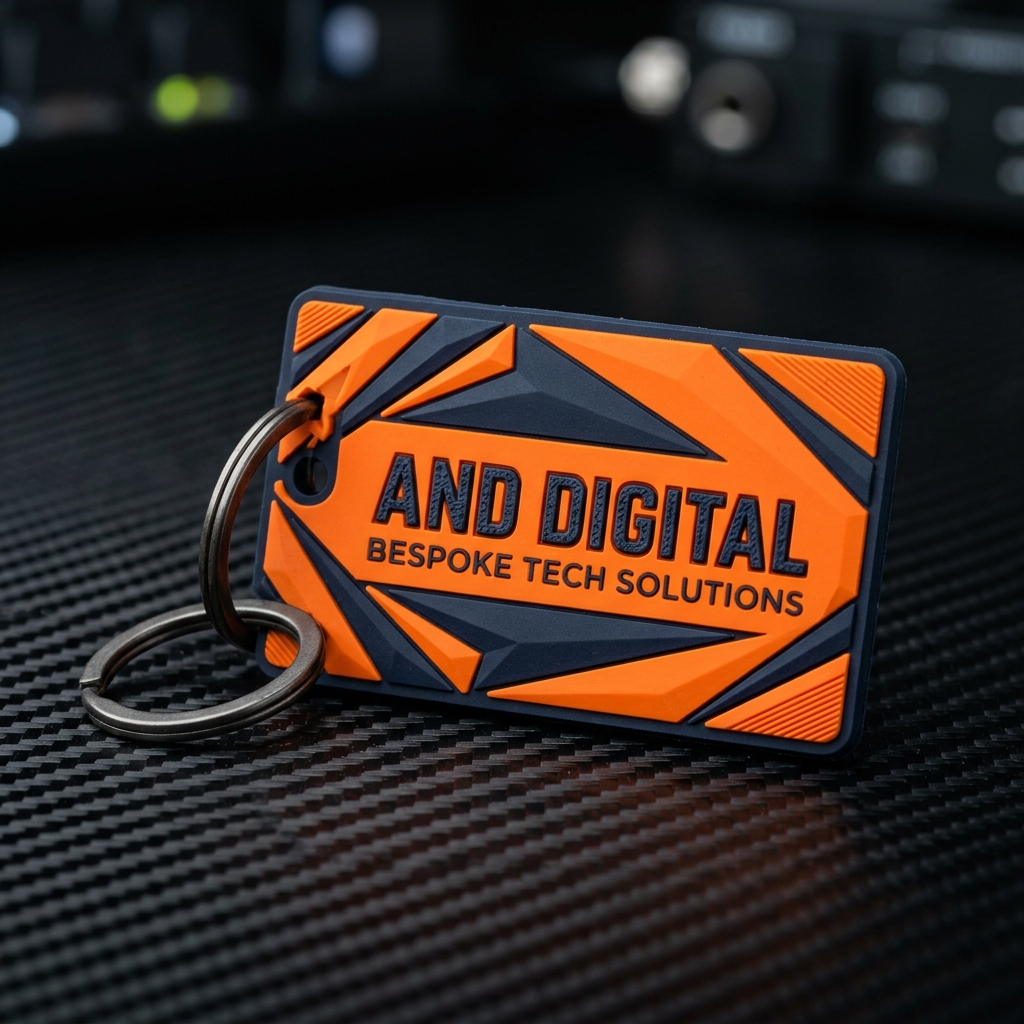
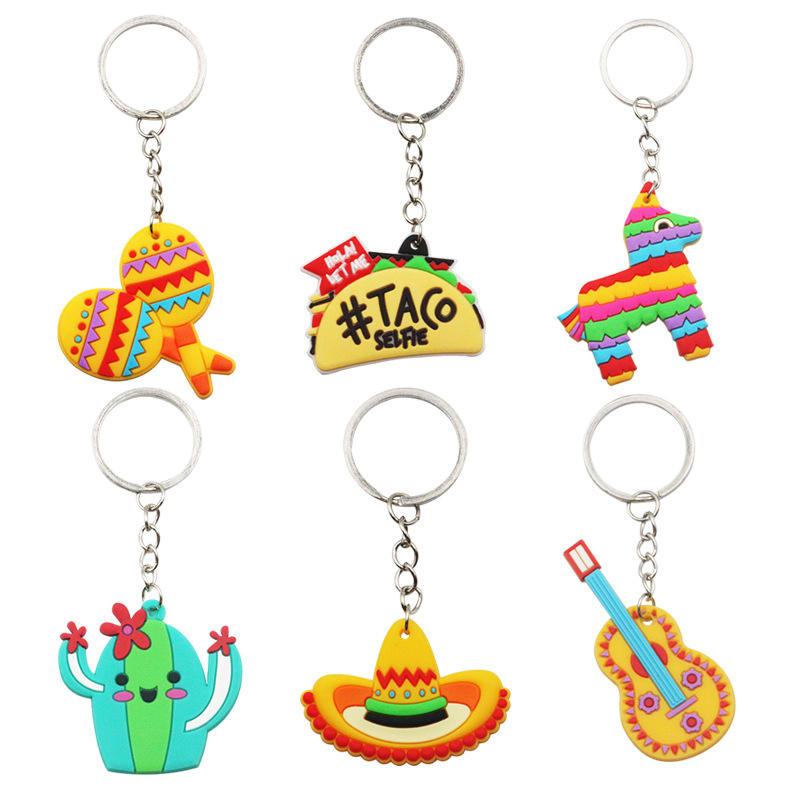
Walk through any comic convention, anime expo, major league sports arena, or airport duty-free gift store today, and you will notice a massive market shift. While classic metal keychains maintain their sovereign grip on executive luxury and automotive brands, flexible polymer keychains—specifically micro-injection soft PVC and liquid silicone—dominate youth pop culture, gaming franchises, lifestyle apparel, and children's entertainment merchandise.
Flexible polymers offer unparalleled aesthetic freedoms: vibrant, ultra-saturated cartoon colors that pop off the shelf, friendly rubbery tactile feedback, complex three-dimensional stepped contours, and zero risk of scratching expensive smartphone screens or car dashboard finishes.
However, behind this cheerful retail exterior lies a complex web of chemical engineering, toxicological compliance regulations, and tooling trade-offs. Procurement directors routinely ask our engineering team: 'Marcus, should we specify Soft PVC or Liquid Silicone for our upcoming global merchandise rollout?'
While both materials feel pleasantly rubbery to a consumer's hand, they belong to completely different chemical universes. One is a thermoplastic vinyl compound plasticized with synthetic organic esters; the other is a thermosetting inorganic synthetic elastomer built on a silicon-oxygen backbone. Choosing the wrong material can lead to customs seizures, oily surface migration, or mold tooling costs that wipe out your profit margins. Let us break down the exact engineering trade-offs.
2. Material Chemistry: Thermoplastic Plastisols vs. Platinum-Cured Elastomers
To understand performance differences, we must look at the underlying polymer lattices under a chemical lens:
Soft PVC (Polyvinyl Chloride Plastisol): PVC in its virgin state is a rigid, brittle resin (the same plastic used for construction drain pipes). To transform it into a flexible, rubbery keychain, PVC emulsion powder is suspended in a liquid plasticizer at approximately a 1:1 ratio, along with thermal stabilizers, epoxidized soybean oil, and organic color pigments. When heated to 180°C to 200°C, the PVC particles absorb the liquid plasticizer and gel together, forming a flexible, resilient elastomeric mass upon cooling. The material has a Shore A hardness typically between 60A and 70A.
Silicone (Polydimethylsiloxane - Liquid Silicone Rubber LSR): Silicone contains no vinyl chloride and zero petrochemical plasticizers. Its backbone consists of repeating alternating silicon and oxygen atoms (-Si-O-Si-), surrounded by organic methyl groups. It is cured via a platinum-catalyzed addition reaction at 140°C to 170°C. Once cross-linked, silicone molecules form an irreversible three-dimensional chemical network. It is non-toxic, hypoallergenic, food-grade safe, and chemically inert across an astounding temperature range from -50°C to +250°C.
3. Mold Tooling Economics: Engraved Brass vs. Hardened Tool Steel
The commercial choice between PVC and Silicone is heavily driven by upfront tooling investment and production run volumes:
Soft PVC Tooling Economics (Low Capital, High Agility): Micro-injection PVC molds are CNC-engraved from thick brass plates. Brass is an exceptionally machinable metal, allowing our high-speed engraving machines (operating at 24,000 RPM with 0.1mm micro-cutters) to carve intricate 2D or 3D tiered relief cavities in just 4 to 6 hours. A typical multi-cavity brass mold costs between $80 to $180 USD, and sampling can be completed in just 48 hours. This makes PVC the undisputed champion for limited-edition merchandise, fast-fashion collaborations, and low MOQs starting at 300 to 500 pieces.
Silicone Tooling Economics (High Capital, High Volume): Liquid silicone rubber requires high-pressure injection molding (10 to 20 MPa) in fully sealed, hardened tool steel dies (such as P20 or NAK80 steel) equipped with micro-vacuum runners and precision shut-off seals. If liquid silicone is injected into an unsealed open mold, its low viscosity causes excessive flashing across the parting lines. A professional steel silicone mold costs between $1,200 to $3,500 USD and requires 15 to 20 days to machine. Consequently, silicone is only economically viable for high-volume programs exceeding 20,000 to 50,000 units.
4. Color Separation and Micro-Injection Dispensing Mechanics
The magic of soft PVC keychains lies in their razor-sharp color boundaries. How do we place eight different vibrant colors side by side on a 40mm cartoon character without colors bleeding together into a muddy mess?
The secret is automated computer-controlled pneumatic micro-injection. Our automated 12-color robotic dispensing tables utilize precision multi-axis Cartesian gantries guided by machine vision cameras:
Step A (Color Dam Geometry): In the brass mold cavity, every colored section is separated by a microscopic recessed groove approximately 0.25mm wide and 0.35mm deep. This groove creates a raised ridge on the mold face that acts as a surface tension barrier.
Step B (Layer-by-Layer Dispensing): The automated syringe dispenses liquid plastisol with viscosity calibrated to precisely 3,500 to 4,500 cP. The liquid flows outward, wetting the cavity bottom until it reaches the boundary groove, where surface tension halts the fluid front cleanly.
Step C (Bake and Gelation): The mold plate travels over an automated electric heating table at 190°C for 45 to 60 seconds. The initial color layer gels and hardens instantly. The mold then cools briefly on a water-chilled plate before the second and third color syringes inject adjacent details. Finally, the heavy base color is poured across the entire backside, and the mold undergoes a final 3-minute curing bake.
In silicone manufacturing, achieving multi-color 3D details is significantly more difficult. Multi-color silicone requires labor-intensive manual pre-forming of silicone paste strips placed by tweezers into hot molds, or expensive multi-shot injection machines. As a result, 90% of complex multi-color cartoon characters are manufactured in soft PVC, while silicone is favored for solid-color wristbands, minimalist key covers, and textured grips.
5. Chemical Safety: Plasticizer Migration, Phthalates, and Child Toy Regulations
This is the most critical compliance section for brand directors. Because keychains frequently feature popular cartoon mascots and anime characters, international customs agencies automatically classify them as 'child-appealing products.' Under US CPSIA Section 108 and EU Toy Safety Directive 2009/48/EC, child-appealing merchandise is subject to the strictest chemical scrutiny.
The Plasticizer Migration Threat: In substandard PVC formulas, low-molecular-weight ortho-phthalates (such as DEHP or DBP) are not chemically bonded to the PVC polymer chains; they are merely physically dissolved within the matrix. Over time, heat, sunlight, and friction cause these oily plasticizers to migrate to the surface. If you have ever touched a cheap vinyl toy that felt greasy, sticky, or had a foul chemical odor, you were experiencing plasticizer exudation.
Worse still, these migrating phthalates can dissolve the lacquer coatings on wooden furniture, soften adjacent plastic items, and leach onto children's hands.
The Naike Formulation Guarantee: Our polymer laboratory exclusively formulates our soft PVC using high-molecular-weight non-phthalate plasticizers—specifically ATBC (Acetyl Tributyl Citrate) and DOTP (Dioctyl Terephthalate). These formulations are rigorously tested by annual SGS third-party audits, certifying zero detectable ortho-phthalates (<50 ppm), zero polycyclic aromatic hydrocarbons (PAHs), and zero heavy metals, fully compliant with California Proposition 65 and EU REACH SVHC lists.
Silicone's Inherent Purity: If your product is destined for infant teethers, pediatric hospital gifts, or direct food/mouth contact, Liquid Silicone Rubber is the gold standard. Silicone contains zero plasticizers, zero vinyl chloride monomers, and zero bisphenol-A (BPA). It is naturally inert, odorless, and passes FDA 21 CFR 177.2600 and German LFGB food-contact tests with ease.
6. Environmental Durability: Tensile Tear Strength and Thermal Shock
In our physical testing laboratory, we evaluated the mechanical durability of high-grade soft PVC against platinum-cured liquid silicone:
Test 1 (Tear Propagation - ASTM D624 Die C): Flexible keychains feature an integrated top loop through which the metal jump ring passes. Under continuous pocket snagging, this loop experiences intense tensile stress. Platinum silicone demonstrated superior tear strength (> 28 kN/m) compared to soft PVC (22 kN/m). Even when pre-nicked with a 1.0mm razor cut, silicone resisted catastrophic tear propagation under pulling loads up to 16 kgf.
Test 2 (Extreme Thermal Cycling - ISO 16750-4): Keychains were cycled between -30°C in an environmental freezer and +120°C in an industrial oven. Soft PVC showed stiffening and minor glass transition brittleness at -25°C, and softened significantly above 85°C. In contrast, silicone retained 100% of its elastic flexibility and tactile softness across the entire thermal spectrum.
Test 3 (Stain and Oil Resistance): Soft PVC possesses exceptional chemical resistance to skin oils, gasoline, household detergents, and mild acids. Silicone, while chemically inert, has a naturally high surface static charge that attracts atmospheric dust and lint. To prevent silicone keychains from feeling dusty in retail stores, our facility subjects finished silicone keyrings to an automated anti-static spray coating or plasma surface treatment that permanently neutralizes static attraction.
7. Procurement Strategy: Summary Matrix for B2B Sourcing
To simplify your next production decision, follow our engineering rule of thumb:
Choose Eco-Friendly Soft PVC when: You have an intricate multi-color 2D/3D character design (4 to 12 distinct colors), order quantities are between 300 and 20,000 pieces, fast 48h physical sampling is required, and unit budget is between $0.25 and $0.65 USD. Ensure you specify 'Certified non-phthalate ATBC plastisol'.
Choose Food-Grade Liquid Silicone when: Your product targets infants or toddlers, requires direct skin contact for fitness wearables, requires extreme heat/cold survival (-40°C to +200°C), order quantities exceed 20,000 units to amortize steel tooling, and your design features clean, minimalist single-color or dual-shot geometry.